

Introduction
The business landscape is evolving faster than ever. Customer expectations are increasing, competition is becoming more intense, and technology is transforming how companies operate. Businesses that continue relying on outdated systems and manual processes risk falling behind their competitors.
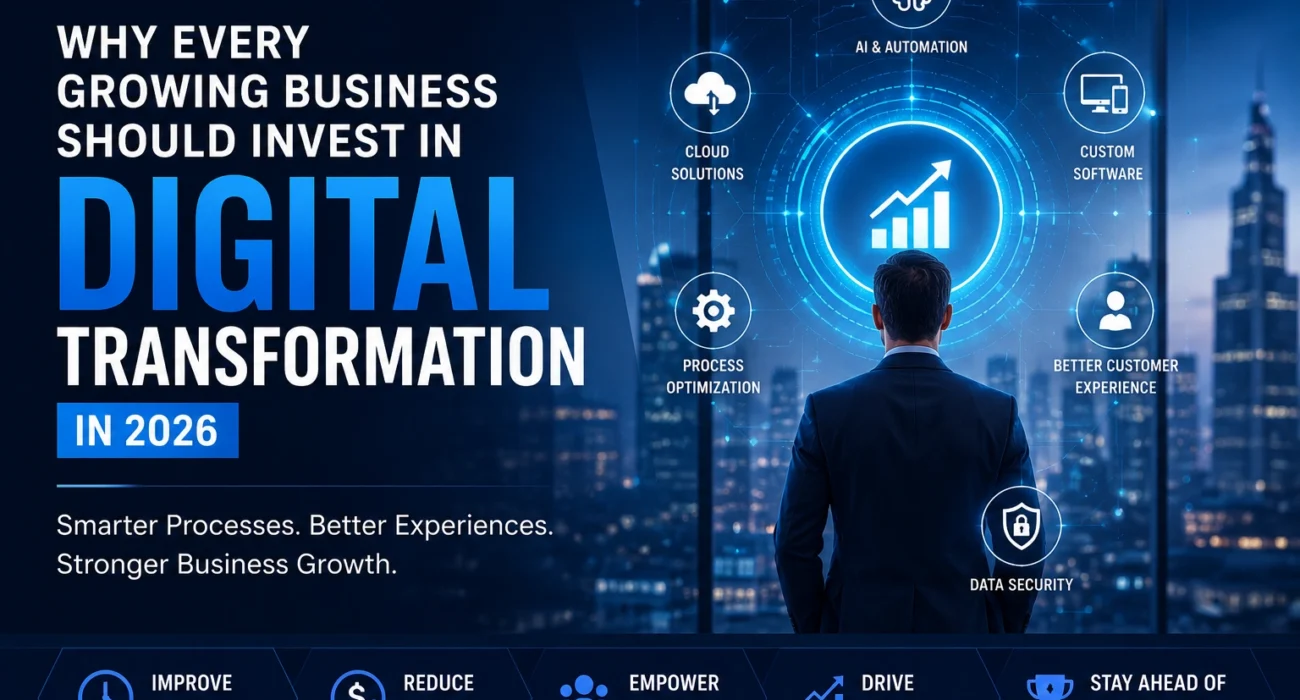
Digital transformation is no longer a luxury reserved for large enterprises. It has become a necessity for businesses of all sizes looking to improve efficiency, enhance customer experiences, and achieve sustainable growth.
In this article, we’ll explore what digital transformation means, why it matters, and how businesses can use technology to stay competitive in 2026 and beyond.
What Is Digital Transformation?
Digital transformation is the process of integrating technology into every aspect of a business to improve operations, customer experiences, and decision-making.
It goes beyond simply adopting new software. True digital transformation involves rethinking how a business operates and leveraging technology to create better outcomes.
Examples include:
- Developing a modern business website
- Automating repetitive tasks
- Implementing custom software solutions
- Using AI-powered tools
- Creating mobile applications
- Improving customer support systems
The goal is simple: make business processes faster, smarter, and more efficient.
Why Businesses Need Digital Transformation
1. Improved Operational Efficiency
Many businesses spend countless hours performing repetitive tasks manually. Activities such as data entry, scheduling, reporting, and customer follow-ups consume valuable time that could be spent on growth-focused initiatives.
Digital tools and automation help eliminate these inefficiencies by streamlining workflows and reducing human error.
Benefits include:
- Faster operations
- Increased productivity
- Reduced operational costs
- Better team collaboration
When processes become more efficient, businesses can achieve more with fewer resources.
2. Better Customer Experience
Today’s customers expect seamless digital experiences.
Whether they are visiting a website, using a mobile app, or contacting customer support, they want fast, intuitive, and reliable interactions.
A poorly designed website or slow response times can drive potential customers directly to competitors.
Businesses that invest in:
- Modern UI/UX design
- Responsive websites
- Mobile applications
- AI-powered customer support
Businesses often see higher engagement, stronger customer loyalty, and improved conversion rates.
Customer experience is no longer a competitive advantage—it’s an expectation.
3. Increased Business Agility
Market conditions can change rapidly.
Businesses need the ability to adapt quickly to new opportunities, customer demands, and industry trends.
Digital systems provide real-time insights and flexibility that help organizations respond faster.
For example:
- Cloud-based software allows teams to work remotely
- Business dashboards provide instant performance tracking
- Automation tools accelerate decision-making processes
Organizations that embrace digital transformation are better equipped to navigate uncertainty and seize growth opportunities.
4. Enhanced Data and Decision Making
Data is one of the most valuable assets a business can possess.
However, many organizations struggle because their information is scattered across spreadsheets, emails, and disconnected systems.
Digital transformation enables businesses to centralize data and gain meaningful insights through reporting and analytics tools.
This leads to:
- Better forecasting
- Smarter decision-making
- Improved customer understanding
- Increased profitability
Businesses that leverage data effectively often outperform competitors who rely on assumptions and manual reporting.
5. Automation Creates Competitive Advantage
Automation is one of the most impactful technologies available today.
From lead management and customer support to invoicing and reporting, automation helps businesses operate more efficiently while reducing costs.
Common automation opportunities include:
- Email marketing workflows
- Customer support chatbots
- Appointment scheduling
- Lead nurturing systems
- Internal approval processes
By automating repetitive tasks, teams can focus on strategic activities that drive business growth.
The Role of Custom Software in Digital Transformation
While off-the-shelf software can solve some problems, many growing businesses require solutions tailored to their specific needs.
Custom software provides:
- Greater flexibility
- Improved scalability
- Better integration with existing systems
- Enhanced security
- Features designed around business workflows
Rather than forcing a business to adapt to software limitations, custom solutions are built to support unique operational requirements.
This often results in higher efficiency and a stronger return on investment.
How AI Is Changing Business Operations
Artificial Intelligence is rapidly becoming a key component of digital transformation.
Businesses are using AI to:
- Improve customer support
- Analyze data faster
- Automate routine tasks
- Personalize customer experiences
- Generate business insights
AI-powered solutions are no longer limited to large corporations. Small and medium-sized businesses can now access powerful tools that improve productivity and reduce operational costs.
Organizations that adopt AI early position themselves for long-term success.
Common Mistakes Businesses Make
Despite recognizing the importance of digital transformation, many businesses struggle because they:
- Focus on technology instead of business goals
- Implement too many tools at once
- Ignore user experience
- Neglect employee training
- Fail to create a clear strategy
Getting Started with Digital Transformation
Businesses don’t need to transform everything overnight.
A practical approach includes:
- Identifying operational bottlenecks
- Evaluating existing systems
- Prioritizing high-impact improvements
- Implementing automation opportunities
- Investing in scalable digital solutions
Small improvements often lead to significant long-term benefits.
The key is taking the first step.
Conclusion
Digital transformation is no longer optional for businesses that want to remain competitive in 2026 and beyond.
Whether it’s improving customer experiences, automating workflows, developing custom software, or leveraging AI, technology offers countless opportunities to increase efficiency and drive growth.
The businesses that embrace digital transformation today will be the ones leading their industries tomorrow.
At Zulso, we help businesses build modern websites, custom software, mobile applications, and AI-powered solutions that support long-term growth and success.
Ready to transform your business?
Contact us today for a free consultation and discover how technology can help your business achieve its next stage of growth.